

By Bram Stoker
Having some time at my disposal when in London, I had visited the British Museum, and made search among the books and maps of the library regarding Transylvania; it had struck me that some foreknowledge of the country could hardly fail to have some importance in dealing with a noble of that country. I find that the district he named is in the extreme east of the country, just on the borders of three stats, Transylvania, Moldova, and Bukovina, in the midst of the Carpathian mountains; one of the wildest and least known portions of Europe. I was not able to light on any map or work giving the exact locality of the Castle Dracula, as there are no maps of this country as yet to compare with our own Ordnance Survey maps; but I found that Bistritz, the post town named by Count Dracula, is a fairly well-known place. …
In the population of Transylvania there are four distinct nationalitiesL: Saxons in the south, and mixed with them the Wallachs, who are the descendants of the Dacians; Magyars in the west; and Szekelys in the east and north. I am going among the latter, who claim to be descended from Attila and the Huns.
(Stoker 2013, 7)
For myself, I felt a sort of paralysis of fear. It is only when a man feels himself face to face with such horrors that he can understand their true import.
(Stoker 2013, 15)
“Welcome to my house! Come freely. Go safely. And leave something of the happiness you bring!”
(Stoker 2013, 17)
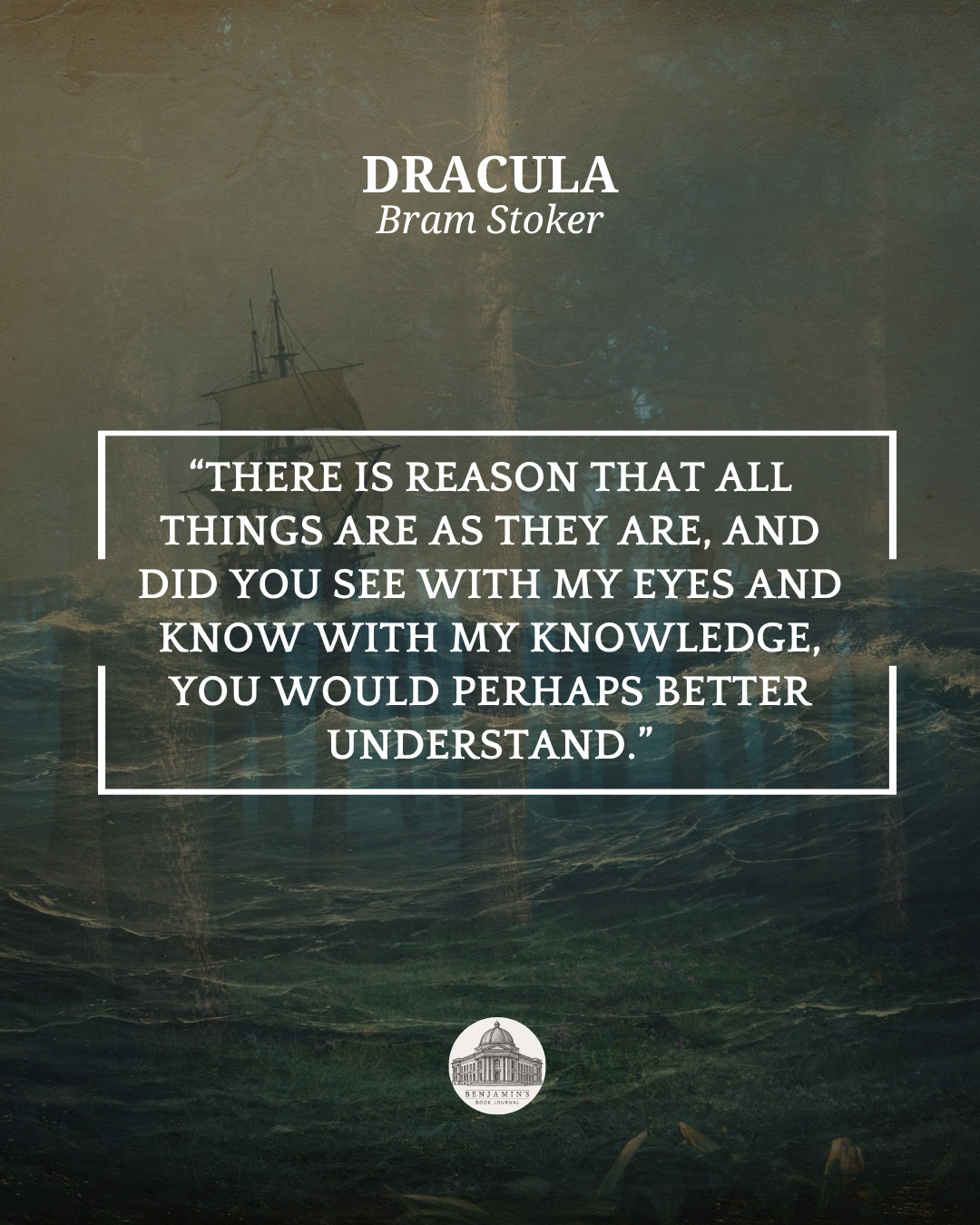
There is reason that all things are as they are, and did you see with my eyes and know with my knowledge, you would perhaps better understand.”
(Stoker 2013, 20)
“I am glad that it is old and big. I myself am of an old family, and to live in a new house would kill me. A house cannot be made habitable in a day; and, after all, how few days go to make up a century. I rejoice also that there is a chapel of old times. We Transylvanian nobles love not to think that our bones may lie amongst the common dead. I seek not gaiety not mirth, not the bright voluptuousness of much sunshine and sparkling waters which please the young and gay. I am no longer young. And my heart, through weary years of mourning over the dead, is not attuned to mirth. Moreover, the walls of my castle are broken; the shadows are many, and the wind breathes cold through the broken battlements and casements. I love the shade and the shadow, and would be alone with my thoughts when I may.”
(Stoker 2013, 22)
Bless that good, good woman who hung the crucifix round my neck! for it is a comfort and a strength to me whenever I touch it. It is odd that a thing which I have been taught to regard with disfavour and as idolatrous should in a time of loneliness and trouble be of help. Is it that there is something in the essence of the thing itself, or that it is a medium, a tangible help, in conveying memories of sympathy and comfort? Sometime, if it may be, I must examine this matter and try to make up my mind about it.
(Stoker 2013, 25-26)
No man knows till he has suffered from the night how sweet and how dear to his heart and eye the morning can be. When the sun grew so high this morning that it struck the top of the great gateway opposite my window, the high spot which it touched seemed to me as if the dove from the ark had lighted there. My fear fell from me as if it had been a vaporous garment which dissolved in the warmth. I must take action of some sort while the courage of the day is upon me.
(Stoker 2013, 38)
Do you ever try to read your own face? I do, and I can tell you it is not a bad study, and gives you more trouble than you can well fancy if you have never tried it.
(Stoker 2013, 45)
Sanguine temperament; great physical strength; morbidly excitable; periods of gloom ending in some fixed idea which I cannot make out. I presume that the sanguine temperament itself and the disturbing influence end in a mentally-accomplished finish; a possibly dangerous man, probably dangerous if unselfish. In selfish men caution is as secure an armour for their foes as for themselves. What I think of on this point is, when self is the fixed point the centripetal force is balanced with the centrifugal; when duty, a cause, etc., is the fixed point, the latter force is paramount, and only accident or a series of accidents can balance it.
(Stoker 2013, 50)
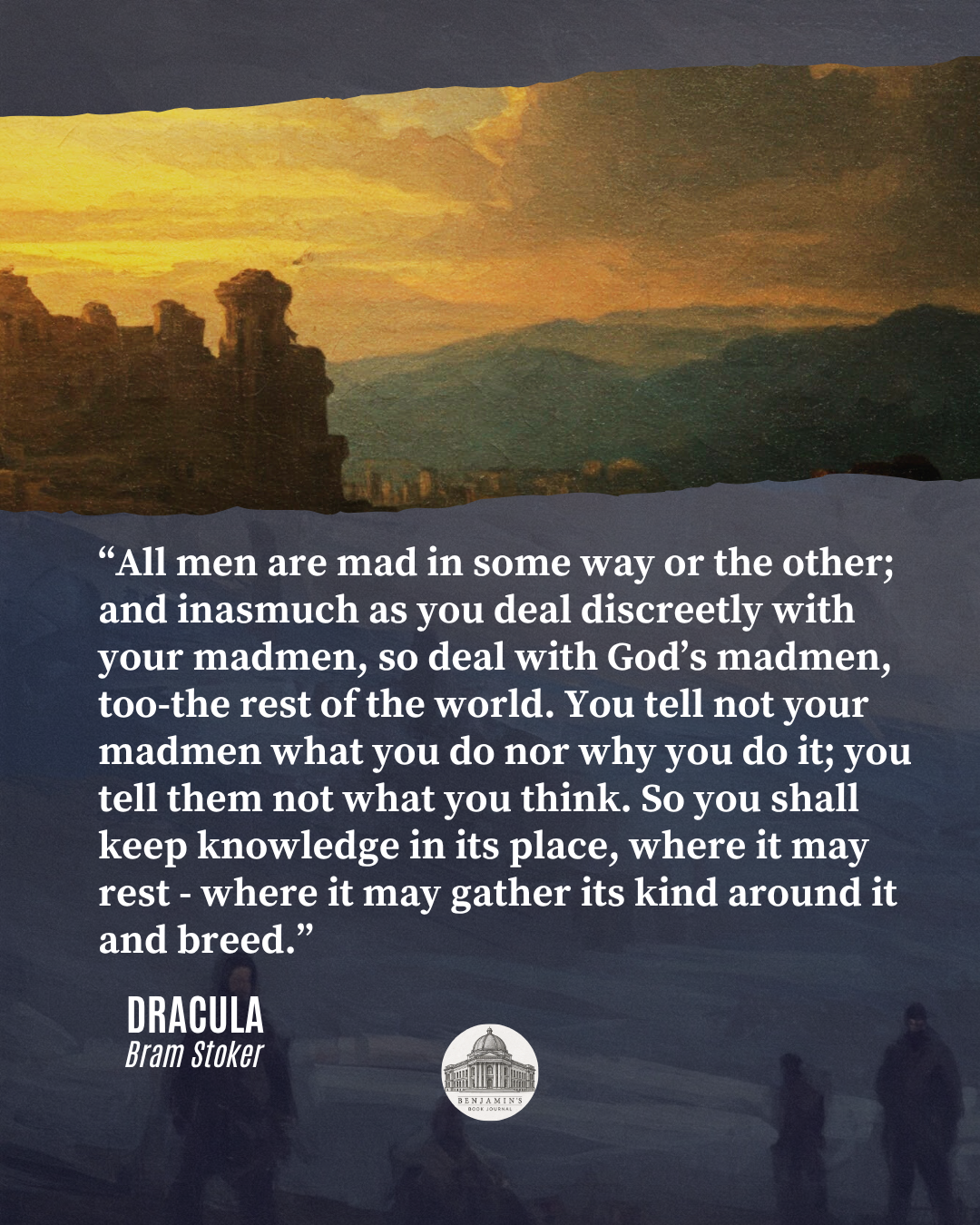
“You deal with the madmen. All men are mad in some way or the other; and inasmuch as you deal discreetly with your madmen, so deal with God’s madmen, too-the rest of the world. You tell not your madmen what you do nor why you do it; you tell them not what you think. So you shall keep knowledge in its place, where it may rest – where it may gather its kind around it and breed. You and I shall keep as yet what we know here, and here.”
(Stoker 2013, 92-93)
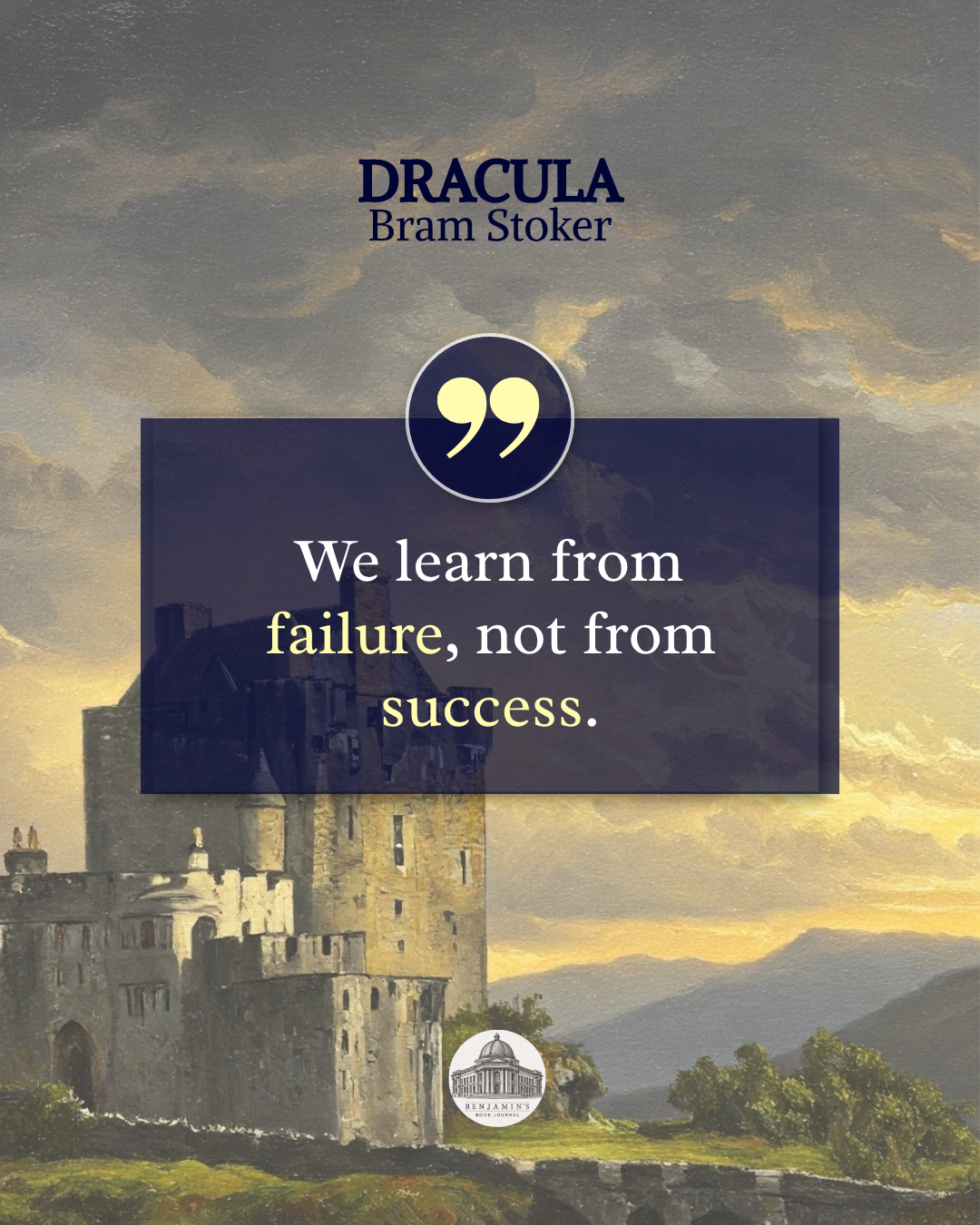
Remember, my friend, the knowledge is stronger than memory, and we should not trust the weaker. Even if you have not kept the good practice, let me tell you that this case of our dear miss is one that may be – mind, I say may be – of such interest to us and others that all the rest may not make him kick the beam, as you people say. Take then good note of it. Nothing is too small. I counsel you, put down in record even your doubts and surmises. Hereafter it may be of interest to you to see how true you guess. We learn from failure, not from success!”
(Stoker 2013, 93)
I comforted him as well as I could. In such cases men do not need much expression. A grip of the hand, the tightening of an arm over the shoulder, a sob in union, are expressions of sympathy dear to a man’s heart.
(Stoker 2013, 129)
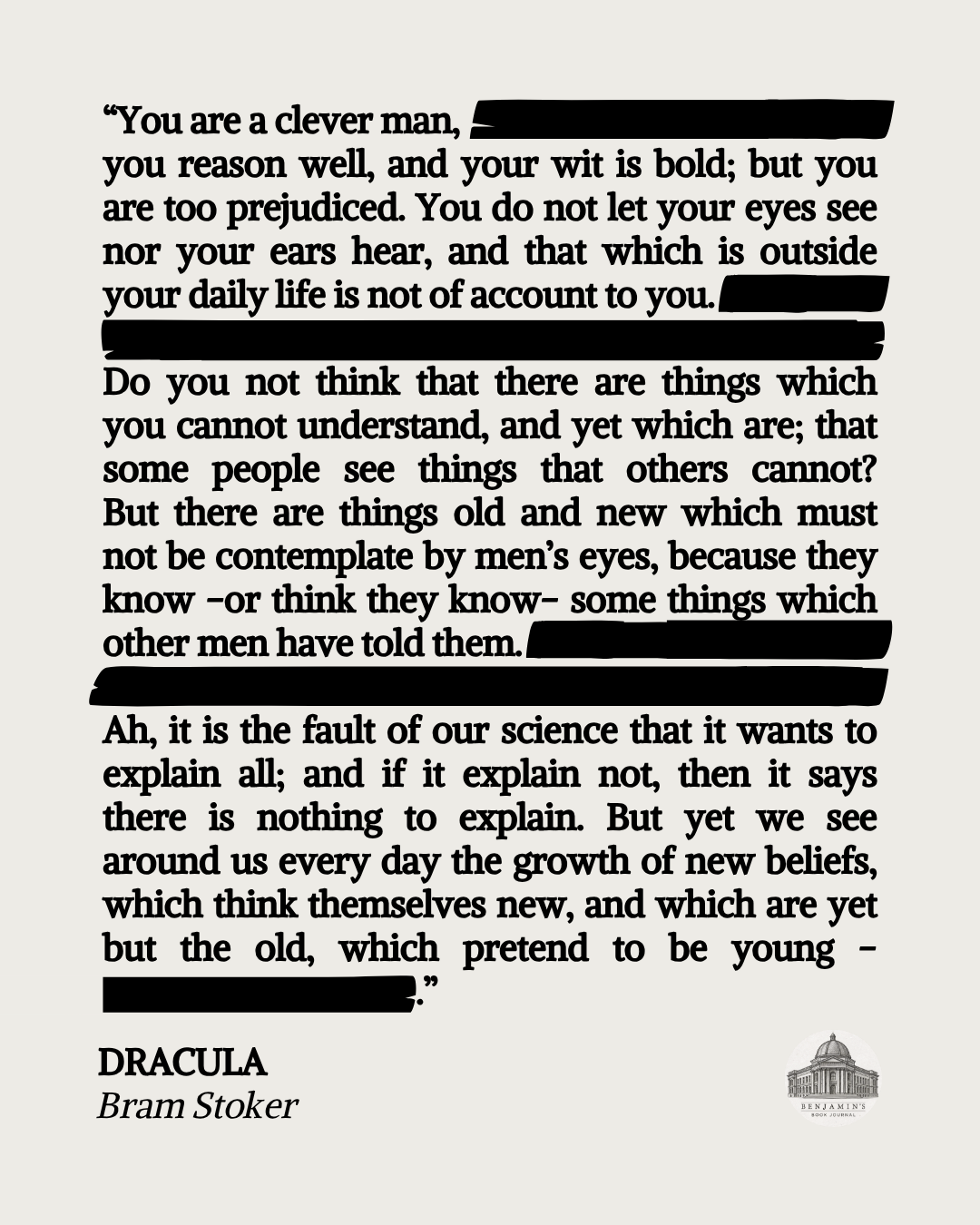
“You are a clever man, friend John; you reason well, and your wit is bold; but you are too prejudiced. You do not let your eyes see nor your ears hear, and that which is outside your daily life is not of account to you. Do you no think that there are things which you cannot understand, and yet which are; that some people see things that others cannot? But there are things old and new which must not be contemplate by men’s eyes, because they know -or thing they know- some things which other men have told them. Ah, it is the fault of our science that it wants to explain all; and if it explain not, then it says there is nothing to explain. But yet we see around us every day the growth of new beliefs, which think themselves new, and which are yet but the old, which pretend to be young – like the fine ladies at the opera.”
(Stoker 2013, 146)
References
Stoker, Bram. 2013. Dracula and Other Horror Classics. N.p.: Barnes & Noble.
ISBN 978-1-4351-4281-7



 Benjamin’s Book Journal
Leave a comment